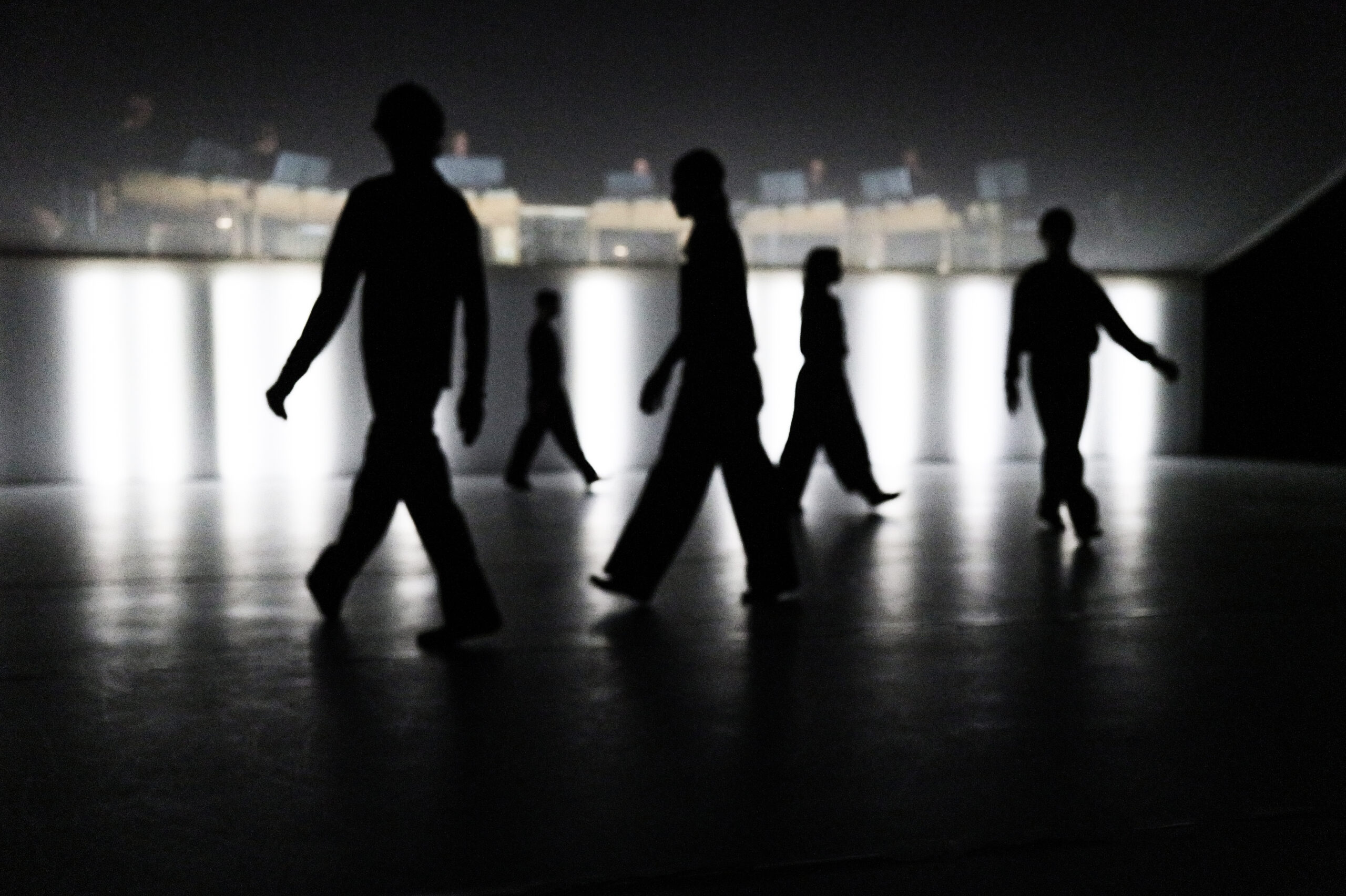
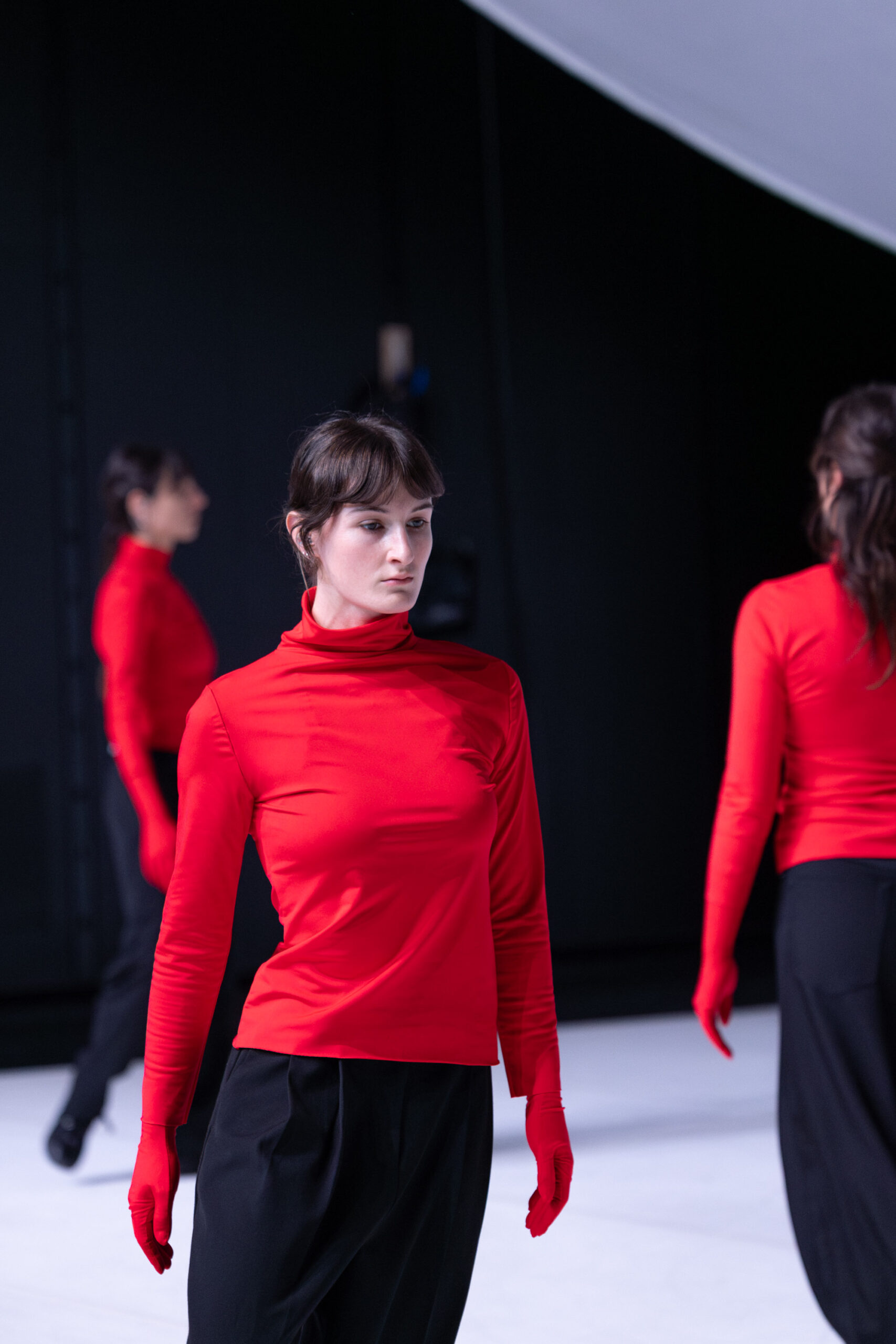
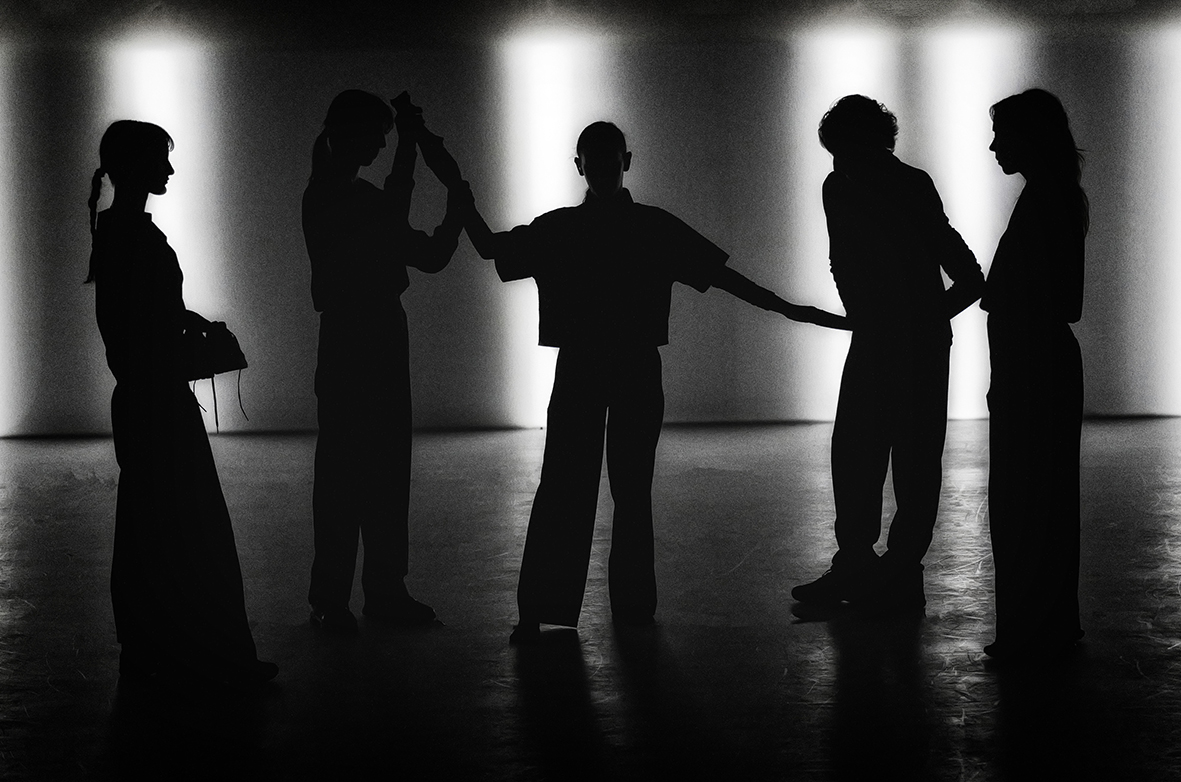
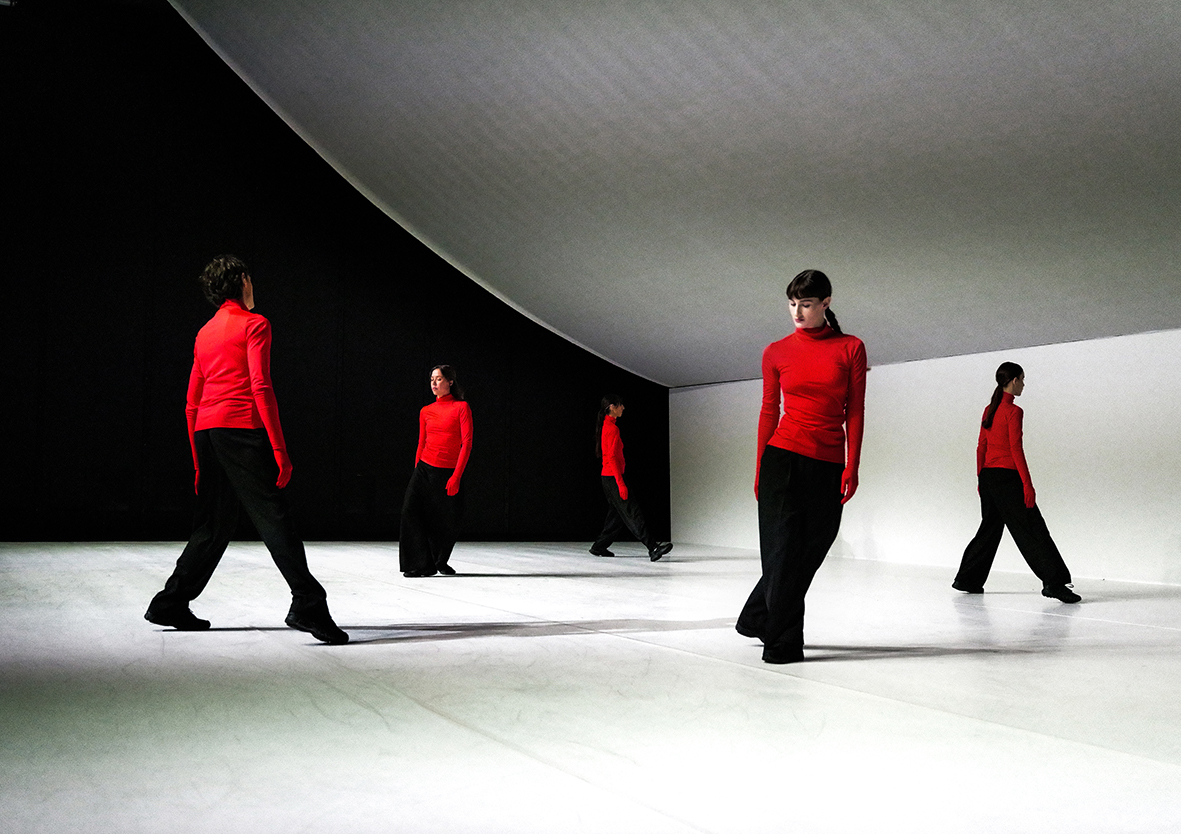
Cindy Van Acker’s piece Pléïades, in absentia opens up an extraordinary perceptual space-time to Iannis Xenakis’ Pléïades, allowing us to listen by seeing.
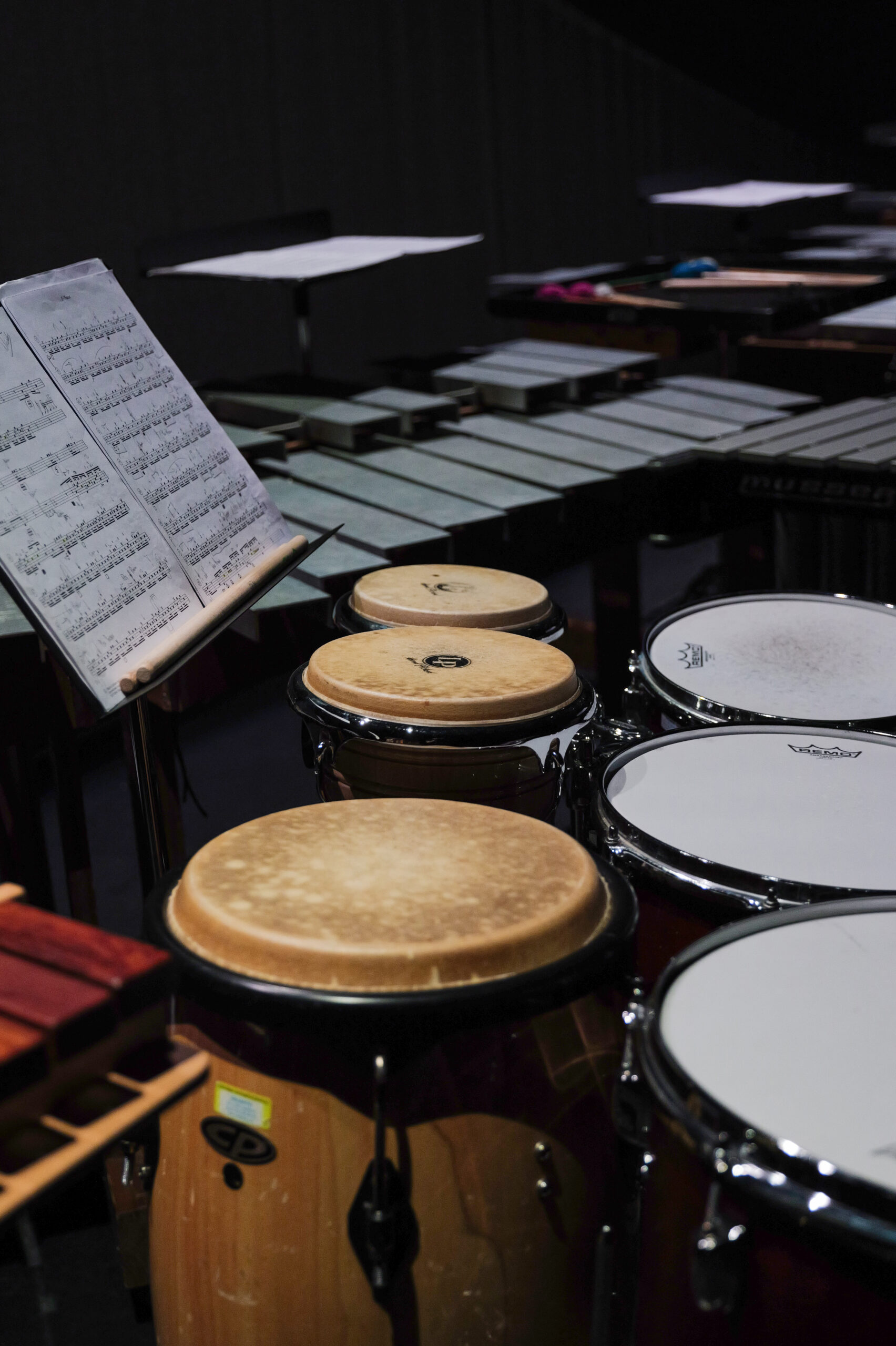
Pléïades is the Greek composer’s main work for percussions, an odyssey written in 1978 for six musicians, each of whom has three sets of instruments. The title evokes a famous star cluster as well as the multitude of instruments gathered for the occasion, like a constellation of timbres. Pléïades, in absentia aspires to be cosmic as well, pulling the musicians out from the usual depth of the orchestra pit and literally locating them in the vault of heaven. Through a scenography and a lighting apparatus which are both simple and magical, developed on two levels and allowing to see the musicians or make them invisible, the focus of the visual image shifts alternately between the dance and the music.